Open Access scholarly literature is online, free of charge, and free of most copyright and licensing restrictions.
Evidence suggests that journal articles that are openly available on the Internet are cited more frequently than articles with restricted access. As early as 2001, an article in Nature investigating the impact of access to conference articles in computer science found that the more highly-cited articles were those freely available online. Since then, studies in a variety of fields—including philosophy, political science, and physics—have shown that open access articles are cited more often than those that are not open. (For a list of such studies and a summary of their findings see The Open Access Citation Advantage.)
Open access also provides important benefits to the public interest and has the potential to change the current scholarly communications system. Since in many fields a journal’s distribution channels typically do not extend beyond subscribers, the reach of its articles tends to be narrow and access limited to those who can afford subscriptions. Articles that are open access, on the other hand, are accessible to anyone with a connection to the Internet.
On April 5, 2011, the Lafayette College Faculty adopted an open access resolution. With the resolution, each faculty member grants to the college permission to make available their scholarly articles in the Lafayette Digital Repository.
Faculty members may send accepted or submitted versions of their manuscripts to the library by using the digital repository submission form. This is known as Green Open Access or self-archiving. Library staff will be responsible for confirming publisher policies and depositing articles in the repository.
Faculty members who do not wish to have their articles included in the Lafayette Digital Repository may opt out either for a particular article or for all their articles by sending an email to refdesk@lafayette.edu
Some Lafayette faculty also choose to make their scholarship openly available by publishing in open access journals. There are full open access journals and hybrid journals, where some articles are open access and others are restricted to subscribers or members. In both types of journals, authors may be charged a publication or processing fee. While the Library does not pay individual Author Publishing Charges, we do contribute to Transformative (or “Read & Publish”) Agreements with a variety of publishers that allow Lafayette authors to publish their work Open Access without paying a fee. (Note that you do not need to pay any open access fees to comply with Lafayette’s Open Access Resolution and make your articles openly available in the Lafayette Digital Repository.)
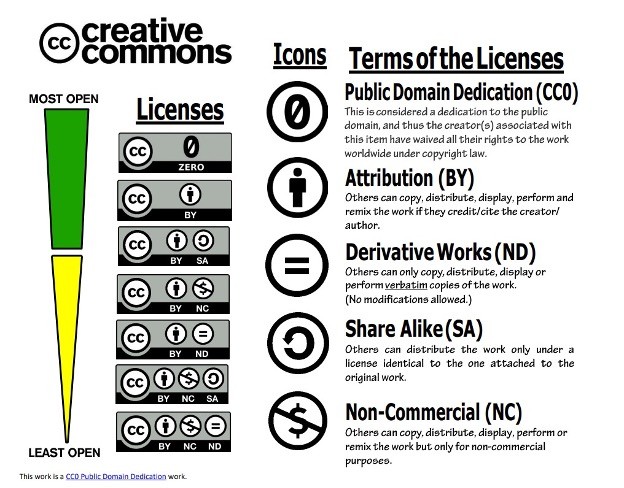
Most OA articles are published under a Creative Commons (CC) license. There are a variety of CC licenses and some Transformative Agreements ask faculty to select the license they would like to use. The Libraries do not have a “standard” or recommended license, but Creative Commons has an interactive “license chooser” tool to walk authors through the factors to consider in making a decision. The CC license scale provides a helpful visualization of how CC licenses vary in their degree of openness and in the rights that authors may opt to retain. We are also happy to consult on this process — please contact a librarian with your questions or to set up an appointment.